
As the personal care consumer market continues to be segmented, categories such as toiletries, oral care products, skin care products, sanitary care products, and personal care appliances continue to be enriched. Brand management gradually presents the characteristics of SKU diversification, diversification of sales channels, and fragmented order fulfillment. From shampoo, shower gel, toothpaste, and toothbrushes to beauty devices, electric shavers, and electric toothbrushes, different products have obvious differences in packaging form, storage conditions, product validity period, product value, and transportation requirements. [
For personal care product brands, the rapid expansion of front-end sales channels often means that the difficulty of back-end warehousing and logistics management increases simultaneously. E-commerce platforms, live streaming, social e-commerce, brand private domains, and offline distribution channels run in parallel. This not only requires warehouses to have high-frequency small order processing capabilities, but also requires them to be able to meet diverse needs such as batch replenishment, combined packaging, batch tracking, and return and exchange processing.
Especially for goods involving liquid packaging, fragile containers, validity period management and hygiene protection requirements, traditional warehousing management methods are prone to problems such as inaccurate inventory information, mixed placement of goods, inadequate management of expired goods, damaged packaging and backlog of returns. At the same time, self-built warehouses need to bear costs such as site rental, personnel management, equipment investment, and system maintenance. Fluctuations in orders during off-peak and peak seasons further increase the difficulty of resource allocation.
In the context of increasingly refined supply chain management, personal care product warehousing outsourcing has become an important choice for brand optimization warehousing and distribution operations. By cooperating with professional fulfillment warehouses, brands can hand over work such as merchandise warehousing, classified storage, inventory management, order processing, packaging, distribution and returns management to professional teams, and build a more flexible warehousing and logistics system with the help of digital systems and standardized processes. [
1. What warehousing and logistics problems does the personal care products industry face?
1. Rich product categories and complex SKU management
Personal care products cover multiple subdivisions, and different products are quite different in terms of specifications, capacity, packaging and usage scenarios.
For example, hair and body care ranges commonly include shampoo, conditioner, shower gel and body lotion in different sizes. Oral care products include toothpaste, toothbrushes, mouthwash, electric toothbrush heads and cleaning accessories. Skincare ranges include creams, serums, lotions and face masks in various formats.
The same product may also have multiple capacities, flavors, packaging versions and promotional combinations, further increasing the number of SKUs.
For warehouses, if there is a lack of unified commodity coding and storage location management mechanisms, it is easy to have problems such as mixing similar commodities, incorrect specification identification, and missing accessories for combined commodities.
Especially in the scenarios of live broadcast promotion, gift box sales and gift matching, one order may contain multiple SKUs at the same time, and even involve the combination of different products such as main products, gifts and trial packs, which puts forward higher requirements for picking accuracy and review process.
Therefore, personal care product warehousing needs to establish standardized product files and conduct unified management of SKUs, barcodes, specifications, packaging sizes, product attributes and related accessories to provide a basis for subsequent inventory circulation and order fulfillment.
2. There are differences in batches and validity periods of goods, and inventory management requirements are strict.
Among the washing, skin care, oral care and hygiene care products, some products have a clear shelf life or validity period.
Different batches of goods may have differences in production dates, expiration dates and packaging versions. If the warehouse is managed only according to the name and quantity of the goods, it will be difficult to accurately grasp the actual inventory status of each batch of goods.
For example, there may be multiple production batches of the same skin care product, and some products have a short validity period. If the warehouse does not establish a batch management and expiration warning mechanism, it may happen that the first-in-warehouse products are detained for a long time, and the later-in-warehouse products are shipped out in advance.
For this type of goods, warehouse management not only needs to record the SKU quantity, but also needs to correlate the production batch number, production date, validity period and actual storage location.
In the outbound process, the first-in-first-out or first-in-first-out strategy should be implemented based on product attributes and brand rules, and system warnings and outbound restrictions should be implemented for upcoming, expired, and abnormal batches.
Through digital inventory management, the transparency of commodity batch circulation can be improved and the risks of overdue backlog and expired mis-delivery can be reduced.
3. Commodity forms are diverse and have different storage environment and packaging protection requirements.
The packaging forms of personal care products are relatively rich, including plastic bottles, glass bottles, hoses, cartons, aluminum cans and independently sealed packaging.
Different packaging forms have different requirements for storage environment and handling operations.
For example, liquid products such as shampoo, shower gel and body lotion require secure caps and leak protection during transport. Glass-packaged serums, fragrances and care products require impact protection and cushioning. Face masks and wet wipes require packaging integrity and environmental management appropriate to each product.
Some skin care products and special care products have clear requirements for temperature, humidity and light protection conditions. If the storage environment does not match the product requirements, the quality of the goods may be affected.
Therefore, personal care products cannot completely adopt a unified storage method, but should formulate differentiated storage specifications, stacking standards and transportation protection plans based on product descriptions, packaging features and safety attributes.
4. Orders fluctuate significantly, and there is pressure on warehousing performance capacity
Personal care products have strong e-commerce sales attributes, and the number of orders is easily affected by promotional activities, live broadcast traffic, celebrity promotion and holiday marketing.
In the daily sales stage, the order size is relatively stable; when encountering platform promotions, new product releases, live broadcasts and holiday marketing, orders may increase intensively in a short period of time.
If the warehouse configures workers and equipment according to the daily order scale, order backlogs, reduced picking efficiency, and shipment delays are likely to occur during the promotion period.
On the contrary, if the space and manpower are allocated according to the sales peak for a long time, daily operating costs will be increased.
How to flexibly adjust storage area, staffing and picking resources according to the sales plan has become a key issue that personal care product brands need to consider when outsourcing warehousing.
5. Multiple sales channels are running in parallel, making inventory collaboration more difficult
At present, personal care product brands usually operate traditional e-commerce platforms, live broadcast e-commerce, content e-commerce, brand malls, community group buying and offline distribution channels at the same time.
Different sales channels have differences in order processing, logistics and distribution, packaging requirements and delivery methods.
B2C business usually focuses on consumers' single-item purchases and combined purchases, focusing on order processing speed, product packaging and logistics information feedback.
B2B business involves bulk purchasing, store replenishment, dealer distribution and regional warehouse allocation, paying more attention to full box picking, sub-box distribution, packing lists and transportation arrangements.
If each channel manages inventory independently, problems such as inventory dispersion, data out-of-synchronization, repeated distribution of goods, and shortages and oversolds are prone to occur.
Therefore, brands need to open up multi-channel inventory information through a unified warehouse management system to achieve inventory collaboration and unified processing of orders under different business scenarios.
6. Return and exchange processing involves hygiene and product status judgment
The return processing of personal care products has certain particularities.
Compared with ordinary daily necessities, some products involve personal hygiene and direct contact usage scenarios, such as toothbrushes, razor accessories, facial masks, health care products, etc., which have higher requirements for packaging integrity and product status.
To return goods, it is not only necessary to confirm whether the SKU, quantity and accessories are complete, but also to check whether the outer packaging is damaged, whether the sealing state is complete, whether the goods are contaminated and whether they meet the conditions for re-sale.
For goods that have been unpacked, used or have hygiene risks, they cannot simply be put on the shelves for the second time as ordinary returned goods. They should be isolated and classified according to product attributes, brand after-sales rules and applicable regulations.
If there is a lack of standardized reverse logistics process, it is easy to cause the slow return of salable inventory, the mixing of abnormal products into normal inventory, and the increase in after-sales processing costs.
2. Personal care products warehousing outsourcing solution: Create a full-process refined warehousing and distribution system
In view of the special needs of personal care products in terms of SKU management, batch validity, product protection, order processing and return management, professional fulfillment warehouses need to systematically plan warehousing management and order fulfillment starting from basic warehousing.
1. Establish commodity standard files and standardize the warehousing acceptance process
The basis of personal care product warehousing outsourcing is to establish complete and accurate product information.
Before the brand enters the warehouse, the product code, product name, brand, specifications, capacity, barcode, packaging size, single product weight, batch management rules and validity period information should be provided to the fulfillment warehouse.
For products with gift combinations, gift box combinations and multi-pack sales, product associations and combination rules should also be clarified in advance.
In the warehousing process, the warehouse checks the physical quantity, SKU information, outer packaging status and batch information based on the warehousing order.
For products that require key management, operations such as appearance sampling inspection, packaging integrity inspection, production batch number recording and photo retention can be added according to the standards set by the brand. [
Through PDA scanning and system warehousing review, it is ensured that the physical information of the goods corresponds to the system data, reducing manual entry and product identification errors.
2. Partition storage based on product characteristics
Personal care product warehousing needs to be reasonably partitioned according to product form, size, weight, value and storage requirements.
For small items such as toothbrushes, brush heads, cotton swabs, and cotton pads, they can be stored in bins, separated shelves, etc. to facilitate quick positioning and picking.
For liquid products such as shampoo, shower gel, body lotion, etc., attention should be paid to shelf load-bearing, packaging sealing and stacking specifications, and leakage prevention and isolation measures should be set up if necessary. [
For facial creams, essences and other fragile packaging products, independent storage locations can be set up based on product attributes to reduce the risk of collisions during transportation.
For medium and high-value care equipment such as beauty instruments, electric shavers, electric toothbrushes, etc., corresponding storage areas can be set up according to product size, value and safety requirements.
For commodities involving temperature, humidity or special transportation conditions, the storage environment should be selected to adapt to the product requirements, and corresponding environmental monitoring records should be retained.
Through scientific partition management, storage interference between different commodities is reduced, and warehouse space utilization efficiency and picking accuracy are improved.
3. Strengthen batch validity management and establish a dynamic inventory early warning mechanism
For personal care products with expiration dates, warehouses need to establish a batch-level inventory management system.
When goods are put into storage, the production date, production batch, expiration date and SKU information are bound, and corresponding management rules are set in the system.
In the goods storage stage, independent cargo locations or batch identifications are set according to the product batches to avoid confusion of different batches of goods in actual operations.
When orders are shipped out of the warehouse, first-in-first-out or first-due, first-out are implemented according to the rules set by the brand to ensure that the flow of goods meets management requirements.
At the same time, expiration warnings, inventory abnormality warnings and expired product locking mechanisms can be set. When a product reaches the warning threshold, timely feedback is provided to the brand to facilitate the operations team to formulate promotion, allocation or other inventory processing plans.
For goods that do not require validity period management, corresponding inventory management methods can be set according to actual attributes to avoid invalid operations that increase warehousing costs.
4. Connect with digital systems to achieve unified management of multi-channel inventory
The digital system can help personal care product brands open up the data link between the sales end and the warehousing end.
Through the data docking between the OMS order management system, WMS warehouse management system and brand ERP, sales orders from different channels can be uniformly connected to the warehouse.
After the order enters the system, picking tasks are automatically generated based on the product inventory, order type and fulfillment rules, and wave splitting and task allocation are performed based on the business scenario.
For brands operating multiple platforms at the same time, a unified inventory pool can be established, and inventory reservation, safety stock and distribution rules can be set according to the sales plans of different channels.
In addition, the system should also have functions such as product inventory inquiry, order status tracking, logistics information return, abnormal order warning and data reporting.
Through the collaborative management of inventory, orders and logistics information, brands can be helped to understand warehousing operations in a timely manner and reduce manual communication and repeated operations.
5. Optimize the sorting review process and improve order fulfillment accuracy
Personal care product orders usually have the characteristics of many small items, complex SKU combinations, and the number of items in a single order is not fixed.
In the order picking process, methods such as order picking, batch picking, zone picking or goods-to-person picking can be used according to the order structure and product storage location.
For small items such as toothpaste, toothbrushes, care accessories and trial packs, barcode recognition and intelligent equipment can be used to assist in picking to improve product positioning efficiency.
After the order is picked, it should also go through product review, quantity confirmation, packaging inspection and other links.
For combined packages and promotional orders, the goods and gifts need to be verified item by item according to the order requirements to prevent problems such as missing or misplaced items.
On the basis of the mutual cooperation between the system and the operation process, the standardization of operations in the warehouse can be improved and order errors can be reduced.
6. Develop differentiated packaging solutions to reduce transportation losses
When packaging and shipping personal care products, both product safety and brand image need to be taken into consideration.
For liquid products such as toiletries, mouthwash, body lotion, etc., sealing protection, cushioning materials and leak-proof packaging can be added according to the structure of the bottle and cap.
For glass bottled products, bubble pads, pearl cotton, paper partitions and custom liners can be used to reduce the risk of collision during transportation.
For soft packaging products such as facial masks, wet wipes, and cotton pads, attention should be paid to the extrusion and sealing integrity of the outer packaging.
Brands can also customize gift box packaging, combination sets, product description cards, promotional gifts and brand publicity materials according to marketing needs.
Through standardized packaging operations and customized value-added services, warehousing fulfillment and brand sales activities are consistent.
7. Establish a standardized reverse logistics process
Return management requires the establishment of a complete process from receipt, registration, unpacking, inspection, classification to inventory processing.
First, associate the return package with the original order information, and verify the product name, SKU and return quantity.
Secondly, the appearance, packaging, accessories and sealing status are inspected according to the product type, and classified according to the brand requirements.
For goods that are unopened, fully packaged and meet re-sale conditions, you can enter the corresponding inventory processing process according to brand authorization.
Personal care products that are unpacked, used or have a risk of contamination should be transferred to the abnormal product area and shall not be directly restored to salable inventory.
For care appliances such as electric toothbrushes, beauty instruments, and razors, the functions, appearance, and accessories can be inspected according to the testing standards provided by the brand.
By recording the return status and processing progress through the system, it helps brands understand the actual situation of returned goods and improves the efficiency of inventory return of salable goods.
8. Realize B2C and B2B business collaboration
With the expansion of the business scale of personal care product brands, the simple drop shipping model has been unable to cover all warehouse distribution needs.
Professional fulfillment warehouses need to be able to handle different business types under a unified inventory system.
B2C business mainly involves consumer order processing, single piece picking, combination packaging and express delivery.
B2B business involves store replenishment, dealer bulk purchasing, regional distribution and supermarket distribution, which requires the production of box marks, packing lists and delivery orders according to different customer needs.
Through unified inventory management and differentiated order fulfillment processes, it can not only meet the needs of online retail business, but also support batch delivery of goods through offline channels.
3. What capabilities should a personal care product brand focus on when choosing a warehousing outsourcing service provider?
Warehousing outsourcing is a long-term cooperation in the supply chain. The professionalism and operational capabilities of the service provider will directly affect the safety of brand products, inventory turnover and consumer experience.
Therefore, personal care product brands should evaluate from the following aspects when screening third-party fulfillment warehouses.
1. Whether it has the ability to adapt to categories
First, it is necessary to confirm whether the warehouse has the storage and operating conditions corresponding to personal care products.
Focus on investigating whether different commodities can be classified and stored, and whether they have the capabilities of liquid commodity packaging protection, fragile commodity management, special category isolation and high-value product security.
For goods that require constant temperature, light protection or specific humidity conditions, it should also be confirmed whether the warehouse can provide corresponding area and environmental monitoring records.
2. Whether it has batch validity management capabilities
For products with shelf life and validity period, it should be understood whether the service provider has batch management, validity period tracking, expiration warning and expired product locking functions.
At the same time, it is also necessary to confirm whether the system can support rules such as first-in-first-out, first-due-first-out, and designated batch outbound, and whether it can generate inventory batch reports.
3. Whether it has multi-platform system docking capabilities
Confirm whether the fulfillment warehouse can complete data docking with the brand's existing ERP, e-commerce platform and order management system, and whether it supports multi-channel order synchronization and inventory sharing.
It is also necessary to understand whether the system can provide real-time feedback on warehousing, shelving, picking, outbound and logistics status to avoid delays in business information.
4. Whether it has flexible performance capabilities during the major promotion period
Brands should evaluate the warehouse's operating equipment, personnel scheduling, order processing capabilities and emergency plans based on daily order volume and promotional peaks.
It is especially necessary to understand whether the warehouse can flexibly adjust resources to avoid order backlogs during live streaming orders, new product launches and holiday promotions.
5. Whether there is a complete return and value-added service system
The return processing of personal care products involves product hygiene, packaging integrity and usage status judgment.
We should focus on investigating whether the service provider has established a return classification and abnormal product isolation mechanism, and whether it can provide value-added services such as commodity inventory, packaging inspection, functional quality inspection, labeling, assembly and repackaging.
At the same time, it is necessary to clarify the scope of testing actually undertaken by the service provider, involving products with professional functional testing and repair, and the corresponding technical standards and division of responsibilities need to be confirmed.
6. Whether there are clear and transparent cost and service standards
Warehousing outsourcing fees usually include warehousing operation fees, warehousing fees, order processing fees, outbound operation fees, packaging consumables fees, logistics distribution fees and customized value-added service fees.
Brands need to conduct comprehensive accounting based on product volume, inventory scale, turnover speed, order quantity and return ratio.
In addition, inventory accuracy, order delivery timeliness, abnormal response timeliness, cargo damage liability, compensation mechanism and data delivery requirements should also be clarified in the contract to form service standards mutually recognized by both parties.
4. Baoshi Fulfillment: Empowering personal care product brands with digital warehousing and full-link warehousing and distribution services
For personal care product brands, when choosing a professional warehousing service provider, it is not only necessary to examine the basic warehousing conditions, but also pay attention to its digital system, intelligent warehousing equipment, category management experience and value-added service capabilities.
Baoshi Fulfillment takes integrated warehousing and distribution services as its business direction, and provides systematic warehousing and logistics support for brand enterprises around business links such as warehousing custody, order fulfillment, logistics distribution, return after-sales and secondary processing.
For personal care appliances and related accessories related to personal care products, Baoshi Fulfillment combines product size, product value, SKU quantity and channel order characteristics to form a warehousing and distribution solution covering warehousing, storage, picking, packaging, distribution and return processing.
1. Self-developed digital system to strengthen commodity inventory management
The warehousing management of personal care products involves a large number of SKUs, different batches and multi-channel orders. Digital management capabilities are an important basis for improving the efficiency of warehousing operations.
Baoshi Fulfillment has independently developed SWMS intelligent warehousing management system, as well as digital tools such as OMS order management system, WCS intelligent dispatching system, TMS transportation management system and BMS settlement management system.
In the warehousing management link, the WMS system is used to record the information of goods entering, putting on shelves, inventory changes, picking and outgoing warehouses, and combined with PDA scanning operations, the synchronization of physical goods and system data is achieved.
For personal care products with batch and expiry date management requirements, management rules such as first-in-first-out and designated batch outbound can be set up to cooperate with inventory counting and expiration date tracking to help brands grasp the inventory status of products.
This digital management method has practical application value for personal care product companies with a large number of SKUs and complex product batches.
2. Intelligent tiered storage to adapt to different specifications of personal care products
Personal care products range from small accessories to medium and large care equipment, with obvious differences in product size and storage requirements.
Baoshi Fulfillment adopts a hierarchical storage management method based on the product volume, weight, value and turnover frequency for the category of personal care and health electrical appliances.
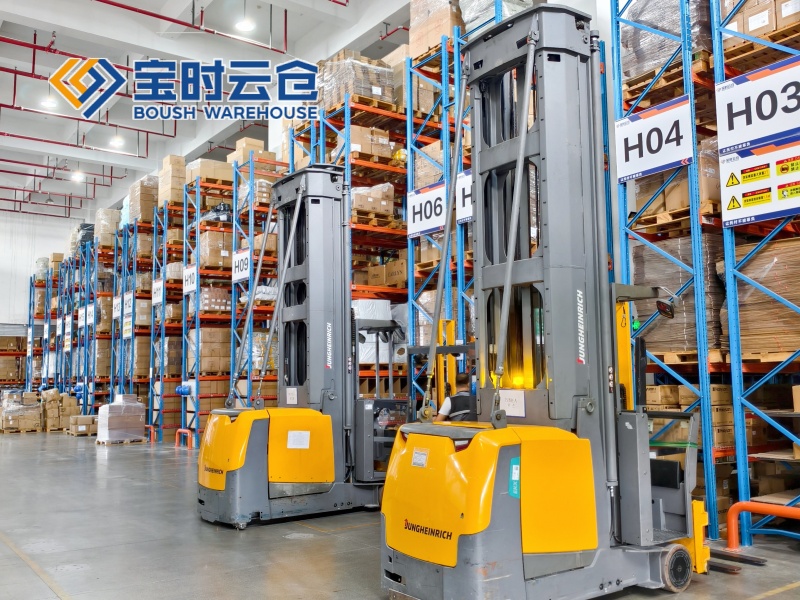
For example, small products and accessories such as electric toothbrush heads, replacement razor heads and nose-hair trimmers can be stored in divided bins. Medium-sized standard products such as electric toothbrushes and facial cleansing devices can be managed in standard storage locations. Larger products such as massage chairs and foot baths can be assigned dedicated areas according to rack load capacity and product characteristics.
At the same time, for high-value precision personal care equipment, corresponding storage protection and safety management measures can be configured.
This way of designing the warehousing structure according to the attributes of the goods helps to reduce the management difficulty caused by the mixing of goods of different specifications and improves storage and picking efficiency.
3. OMS system connects multi-channel orders to improve omni-channel fulfillment efficiency
As the online sales channels of personal care brands continue to expand, problems such as scattered order sources and unsynchronized inventory information have gradually become prominent.
Baoshi Fulfillment OMS order management system supports docking with sales platforms such as Tmall, JD.com, Douyin, Xiaohongshu, and WeChat applet through Qimen interface and API interface, and can also dock with enterprise ERP and purchase, sale and inventory management systems according to brand needs.
After the order enters the system, intelligent wave splitting and picking task allocation can be carried out, and subsequent operations can be completed in conjunction with the warehouse management system.
For brands that also operate electric toothbrushes, electric shavers, beauty instruments and care accessories, corresponding picking plans can be formulated based on the specifications and order structures of different commodities.
Through unified access to multi-channel orders and collaborative inventory management, the operational pressure caused by repeated entry and manual allocation is reduced.
4. Intelligent warehousing equipment and professional operation teams collaborate to enhance order processing capabilities
Orders for personal care products usually have the characteristics of many small SKUs, many combinations of goods, and high picking frequency.
The traditional manual picking model requires workers to frequently move between warehouse locations, which can easily cause job congestion when the order volume increases.
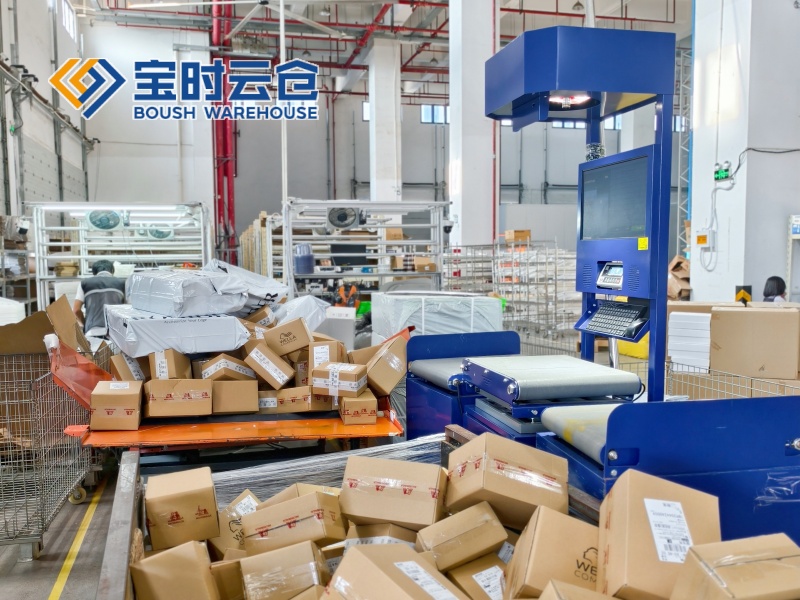
In the field of intelligent warehousing, Baoshi Fulfillment has laid out intelligent operation plans such as from boxes to people, and cooperates with automated sorting equipment, automated packaging machines and intelligent weighing equipment to optimize the product picking and order processing processes in the warehouse.
Through the collaboration of intelligent equipment and warehouse management systems, the time spent manually searching for goods can be reduced and the continuity of operations in the warehouse can be improved.
For small accessories, standardized goods and multi-SKU orders in personal care products, intelligent picking and manual-assisted operations can be reasonably arranged according to the actual order structure to improve the efficiency of warehousing resource utilization.
5. Customized value-added services to meet diverse commodity packaging needs
Personal care product brands often involve marketing scenarios such as gift box sales, promotional sets, new product combinations and gift matching.
The relevant value-added services provided by Baoshi Fulfillment include warehousing inspection, functional quality inspection, package packaging, labeling and coding, plastic packaging, greeting card printing and product engraving, etc. The operation process can be formulated according to the brand's product attributes and marketing needs.
For personal care electrical products, the appearance and function inspection can be carried out according to the characteristics of the product packaging, and the accessories inventory, combined packaging and customized delivery can be completed according to the brand requirements.
For consumables involving liquid packaging, glass containers and special packaging requirements, the brand can combine the actual product attributes and confirm leakage prevention, anti-collision, packaging and consumables solutions with the service team.
Through the collaboration of warehousing and secondary processing services, brands can integrate part of the product packaging and marketing mix work into the warehouse, reducing the time and management costs generated by the flow of goods between different processing links.
6. Improve the return collaboration system and improve the efficiency of reverse logistics processing
The return of personal care products involves the judgment of product status, packaging integrity and hygienic conditions, and requires clear operating standards.
Baoshi Fulfillment has established a corresponding return processing process for the category of personal care and health electrical appliances, and can provide services such as return unpacking and inventory, functional testing, appearance inspection, accessory replacement, secondary packaging and re-shelfing.
For personal care equipment such as electric toothbrushes, beauty instruments, and razors, the corresponding return inspection and classification processing can be completed according to the testing requirements provided by the brand.
For personal care consumables that have been unpacked or have hygiene risks, they need to be isolated and managed according to the product category and brand return rules, and should not be directly put on the shelves for the second time as ordinary products.
Through return registration, product status records and system data synchronization, brands can more clearly grasp the progress of reverse logistics processing and reduce the impact of the retention of returned goods on inventory turnover.
7. Support B2C and B2B business collaboration, covering multiple sales scenarios
In addition to online retail, personal care product brands usually also involve offline stores, dealers, supermarket channels and regional distribution business.
Baoshi Fulfillment has B2C and B2B multi-business scenario fulfillment capabilities, and can formulate corresponding warehouse operation processes according to different order types.
For B2C orders, order synchronization, product selection, review packaging and express delivery are completed around the consumer's drop shipping needs.
For B2B orders, batch picking, carton distribution, box mark production and packing list sorting can be carried out according to the needs of dealers and stores, and corresponding transportation methods can be arranged based on the volume of goods.
By unifying inventory data and differentiated operating rules, it helps brands coordinate online retail and offline wholesale business, reducing inventory dispersion and operational pressure caused by multi-warehouse management.
8. Full-cycle service support to promote continuous optimization of warehouse and distribution operations
Warehousing outsourcing cooperation not only involves warehouse operations, but also requires multiple links such as system docking, process design, daily operations, and abnormal problem handling.
Baoshi Fulfillment provides brands with supporting support from demand research, program design, system docking to daily operations through the collaboration of exclusive business service managers and teams such as technology research and development, warehousing operations, logistics scheduling and order services.
Brands can communicate and adjust storage areas, inventory management methods, order processing rules and packaging processes based on actual business conditions.
Through operational data feedback and process review, inventory configuration, order operations and logistics distribution arrangements are gradually optimized to maintain coordination between warehousing outsourcing and brand business development.
5. How to implement the warehousing outsourcing of personal care products smoothly?
Professional fulfillment warehouses can provide warehousing facilities, system tools and operations teams, but to truly improve warehouse distribution efficiency, brands and service providers also need to make early preparations and cooperative management.
1. Sort out product information and warehousing requirements
Brands need to sort out product SKUs, specifications, barcodes, packaging dimensions, weight, production batches, expiration dates and storage requirements in advance.
For liquids, glass packaging, electrical equipment and health care products, product characteristics and operating requirements should be marked separately. [
At the same time, new products, promotional products, long-term inventory and high-frequency sales products are classified to facilitate the fulfillment warehouse to formulate reasonable storage location planning.
2. Clarify system docking and inventory management rules
Before the goods are officially put into the warehouse, the system docking test between ERP, OMS and WMS should be completed.
Clarify the inventory synchronization method, order allocation rules, batch management method, validity period warning threshold and abnormal order processing process.
For brands that have channel inventory reservation, gift box combination and gift matching needs, relevant rule configuration needs to be completed in advance.
3. Develop commodity storage and packaging operation standards
Brands should provide clear product storage requirements and packaging specifications to service providers.
For example, how to prevent leakage of liquid products, what kind of cushioning materials are used for fragile goods, how to assemble promotional combinations, whether special goods need to be stored independently, etc.
By forming standardized operating documents, operational differences between different personnel and different shifts are reduced.
4. Verify warehousing capabilities through trial operation
Before officially closing the position, you can select some products and sales channels for trial operation.
Focus on verifying the accuracy of warehousing, inventory synchronization, batch records, order picking, packaging effects and logistics distribution.
In view of the problems that occurred during the trial operation, the warehouse location rules, system configuration and operating procedures were adjusted in a timely manner, and the warehousing scope was expanded after the main links were stabilized.
5. Establish a continuous operation evaluation mechanism
After cooperation enters daily operations, brands need to regularly pay attention to inventory accuracy, order delivery timely rate, wrong delivery and missed delivery rate, product damage rate, return processing timeliness and comprehensive warehousing costs.
At the same time, the inventory turnover situation, the quantity of upcoming goods and the changes in orders from different channels should be regularly analyzed, and the replenishment and warehousing resource allocation should be adjusted in a timely manner.
Through continuous optimization of operational data, we promote the upgrade of warehousing outsourcing from basic hosting to refined supply chain management.
6. Professional fulfillment warehouse helps personal care product brands build stable supply chains
As personal care consumer demand continues to be subdivided, competition between brands is no longer limited to product research and development, marketing channels and price strategies. The operational quality of warehousing and logistics is also related to consumer experience and brand management efficiency.
From SKU refined management to batch expiry date tracking, from liquid commodity packaging protection to multi-channel order fulfillment, from return quality inspection to secondary inventory transfer, personal care product warehousing outsourcing requires service providers to have more systematic management capabilities.
For brands that want to reduce investment in self-built warehouses, improve order processing efficiency, and improve inventory management mechanisms, the introduction of professional third-party fulfillment warehouses can help reduce the daily management burden of warehousing and logistics links and improve the flexibility of supply chain operations.
Baoshi Fulfillment relies on self-developed digital management systems, intelligent warehousing equipment, personal care and health appliance warehousing practices and full-link value-added services to provide evaluable warehousing outsourcing solutions for personal care appliances and related accessories brands.
When a brand chooses a cooperation model, it can further communicate with Baoshi Fulfillment on warehousing planning, system docking, product protection and cost structure based on its own product type, SKU quantity, inventory scale, sales channels and after-sales needs, and clarify the service scope and operating standards of both parties.
In the future, with the continued development of intelligent warehousing equipment and supply chain digital management, personal care product warehousing outsourcing will gradually upgrade in the direction of inventory refinement, order intelligence, distribution coordination and after-sales process, providing more stable warehousing and distribution support for brands to expand diversified sales channels and optimize operating efficiency.