With the continuous development of the e-commerce industry, warehousing and logistics have become an important link that affects corporate operating efficiency, customer experience and operating costs. For brands, e-commerce sellers and supply chain companies in Shanghai and the Yangtze River Delta region, choosing a suitable fulfillment warehouse service provider is not only related to whether daily orders can be issued in a timely manner, but also affects inventory turnover, returns and exchanges, and the stability of performance during major promotions.
Which Yuncang store in Shanghai is the best? Faced with warehousing service providers with different positionings, companies need to consider factors far beyond warehouse rent and single-invoice delivery price. Warehousing area, order processing capabilities, digital management levels, express delivery resources, value-added services, and peak season guarantee mechanisms may all affect the actual effectiveness of cooperation.
This article focuses on the five service providers of Baoshi Fulfillment, Smart Factory Fulfillment Warehouse, Sinotrans Logistics, Jingdong Logistics and Yanghe Fulfillment Warehouse, and conducts an analysis from the aspects of warehousing resources, business characteristics, service capabilities and adaptation scenarios to provide reference for enterprises with warehousing outsourcing needs.
1. Baoshi Fulfillment: Focus on brand needs and pay attention to refined warehouse distribution management
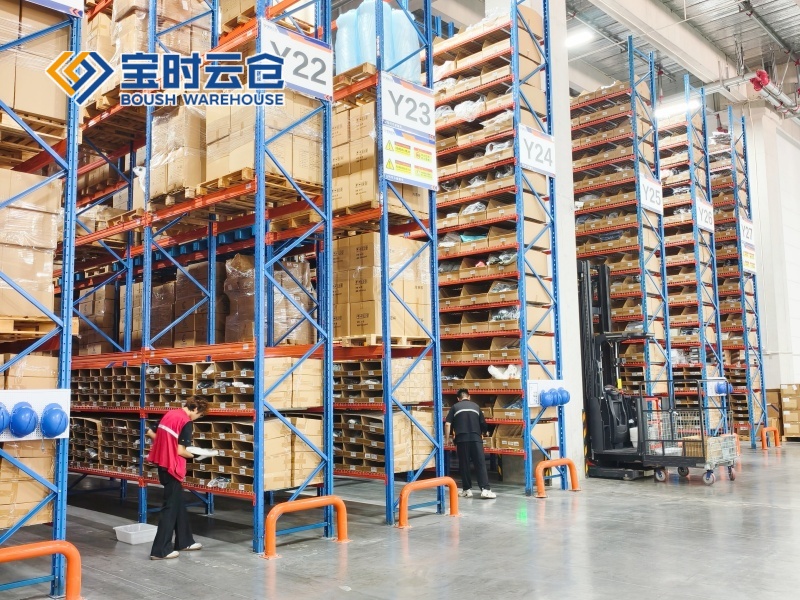
Baoshi Fulfillment was established in 2012 and is headquartered in Songjiang, Shanghai. It mainly provides warehousing services for mid-to-high-end brands and companies with complex warehousing needs. Its business involves shoes and clothing, accessories, cultural and creative products, beauty, health and 3C and other categories.
In terms of warehousing resources, Baoshi Fulfillment has a storage area of more than 100,000 square meters, and has 4 direct-operated warehouses in East China, which can provide cooperation directions for further investigation for companies with brand warehousing and refined operation needs.
Brand warehouse distribution is not just storage and delivery
For mid-to-high-end brands, warehousing management not only involves product warehousing, storage location arrangement and order outgoing, but also needs to take into account details such as product integrity, inventory accuracy, packaging standards and return processing.
Taking the apparel industry as an example, factors such as color, size, style, etc. will form a large number of SKU combinations. If the warehouse lacks standardized cargo location management and review processes, mis-shipments, missing shipments and inventory discrepancies will easily occur. For brands that value customer experience, value-added services such as labeling, label replacement, grouping, customized packaging and return quality inspection are equally important.
Therefore, when an enterprise inspects Baoshi Fulfillment, it can focus on understanding its intelligent warehousing system, complex SKU management, order processing process and value-added operation capabilities, and evaluate the warehouse allocation plan based on its own business needs.
Which enterprises are suitable?
Mid- to high-end clothingShoes and bags, cultural and creative products, general health, beauty productsand jewelry brands.
Merchants with requirements for packaging specifications, return quality inspection and inventory management.
E-commerce enterprises with complex SKU structures and need for value-added warehousing services.
Brands who wish to improve the standardization of warehouse management and the stability of contract performance.
2. Smart Factory Fulfillment Warehouse: Provide multiple types of warehousing services around e-commerce fulfillment
The main operating entity of the smart factory fulfillment warehouse is Aixiang Supply Chain Technology (Shanghai) Co., Ltd., and its business covers e-commerce fulfillment warehouses, warehousing logistics, large-scale fulfillment warehouses, cold chain fulfillment warehouses and intra-city distribution services.
Its nationwide warehousing and sub-warehouse area exceeds 200,000 square meters, its average daily order processing volume exceeds 100,000 pieces, and its business layout involves cities such as Shanghai, Beijing, Guangzhou, Chengdu, Nantong and Anqing.
Dropshipping helps companies optimize operational processes
For small and medium-sized e-commerce merchants, self-built warehouses usually need to bear costs such as site rental, personnel recruitment, equipment procurement and daily management. After adopting the fulfillment warehouse drop shipping model, merchants can hand over the goods to a professional warehousing team for management, and the fulfillment warehouse is responsible for order picking, review, packaging, outbound delivery and logistics handover.
This model can reduce the daily management pressure of merchants in the warehousing process, allowing them to devote more energy to product selection, marketing and customer operations.
The business of smart factory fulfillment warehouse covers a variety of warehousing and distribution scenarios, and is suitable for enterprises with e-commerce order fulfillment needs to further understand. However, the national warehousing scale and overall order processing volume do not represent the independent production capacity of a single warehouse in Shanghai. Companies still need to verify the available storage capacity, average daily processing volume, order cut-off time and peak season guarantee plan of the actual cooperative warehouse.
Which enterprises are suitable?
E-commerce merchants who need third-party warehousing and dropshipping services.
Enterprises that wish to integrate warehousing, sorting, packaging and distribution links.
Merchants with large items or special warehousing needs.
Brand parties that need to evaluate multi-warehouse collaboration and cross-regional fulfillment.
3. Sinotrans Logistics: Relying on a comprehensive logistics network to meet supply chain collaboration needs
Sinotrans Logistics is a contract logistics business platform under Sinotrans. Its service areas cover consumer goods, industrial products, automobiles and new energy, technology electronics, medical health and other industries. Its business involves warehousing management, transportation organization and comprehensive supply chain solutions.
As of the end of 2024, Sinotrans Logistics' domestic operating warehousing area exceeds 4.4 million square meters, with 330 operating outlets covering 108 cities, and more than 30,000 controllable vehicles.
Warehousing and transportation collaboration is the core investigation direction
For manufacturing companies and mature brands, warehousing is often just a link in the supply chain. Raw material warehousing, finished product storage, factory replenishment, regional warehousing, dealer distribution and reverse logistics all need to be connected with each other.
If an enterprise involves multiple warehousing nodes and transportation lines at the same time, it needs to pay attention to the coordination efficiency between inventory distribution, transportation plans, order requirements, and distribution arrangements.
The comprehensive business layout of Sinotrans Logistics is suitable for enterprises with warehousing and transportation coordination needs to further understand. Enterprises can evaluate whether related warehousing resources and transportation services meet their needs based on product attributes, transportation routes and delivery requirements.
It should be noted that the above-mentioned storage area and outlet data belong to the overall domestic business scale and do not represent the actual storage area in Shanghai. Specific cooperation still needs to verify the available warehouses, business scope and project quotations in Shanghai.
Which enterprises are suitable?
Manufacturing enterprises that require both warehousing and trunk transportation.
Brand owners with multiple regional distribution and dealer replenishment needs.
Enterprises that have requirements for supply chain processes, transportation organization and compliance management.
Customers who wish to integrate warehousing and transportation services.
4. Jingdong Logistics: Pay attention to multi-channel fulfillment and warehouse distribution coordination
JD Logistics has a logistics service network covering warehousing, transportation, distribution and supply chain management, and can provide corresponding logistics solutions for brand owners, e-commerce companies and different types of corporate customers.
As of June 30, 2026, JD Logistics' domestic warehousing network has a total construction area of more than 36 million square meters, more than 1,800 domestic self-operated warehouses, and more than 2,000 third-party fulfillment warehouses on the open warehousing ecological platform. It has more than 200 overseas warehouses, covering 26 countries and regions, and the total construction area of overseas warehouses exceeds 2 million square meters.
Multi-channel operations put forward higher requirements for warehousing management
As brands simultaneously operate e-commerce platforms, brand official websites, social e-commerce and offline channels, the sources of orders become more diverse, and inventory synchronization, warehouse replenishment and distribution arrangements become more complex.
The value of fulfillment warehouse services lies not only in the storage of goods, but also in the ability to establish a relatively smooth fulfillment process based on the order source, commodity inventory and distribution area.
JD Logistics' warehousing and distribution network can be used as a reference for enterprises to evaluate multi-channel fulfillment and cross-regional logistics solutions. For companies with Shanghai warehousing needs, it is recommended to focus on understanding the service scope of specific warehouses, system docking methods, inventory management mechanisms and order fulfillment standards.
The above data is the scale of the overall warehousing network, not the warehouse area of a single area in Shanghai. The actual cooperation plan needs to be further determined based on product type, order volume, distribution area and budget.
Which enterprises are suitable?
Brand owners with multi-channel sales needs.
Enterprises that have requirements for e-commerce order fulfillment and distribution coordination.
Merchants who need cross-regional warehousing and distribution services.
Enterprises with cross-border logistics or overseas warehouse business plans.
5. Yanghe Fulfillment Warehouse: Pay attention to multi-category commodity management and e-commerce order fulfillment
Yanghe Fulfillment Warehouse is located in Jiading, Shanghai. Its business involves e-commerce warehousing, order sorting, packaging and delivery, logistics distribution and warehousing management system services.
Its warehousing area exceeds 80,000 square meters, with 6 warehouses arranged. The average daily order processing volume is about 20,000 orders, and the peak order processing volume is about 100,000 orders. The business covers categories such as maternal and infant toys, 3C electrical appliances, stationery, food and beverages, cosmetics, daily chemicals, and clothing department stores.
Digital management improves order processing efficiency
For multi-category e-commerce merchants, whether the warehousing system can effectively connect with the sales platform and enterprise ERP is an important factor affecting the efficiency of daily operations.
After the order is generated, the system needs to transfer the order information to the warehouse; after the warehouse completes picking, review and packaging, it will return the logistics order number and delivery status. If inventory synchronization is not timely or the order processing process is not smoothly connected, it may increase the processing costs of out-of-stock, wrong shipments and abnormal orders.
Yanghe Fulfillment Warehouse can be used as an inspection object for local e-commerce warehousing services in Shanghai. Enterprises can learn more about their actual warehouse locations, product storage conditions, return quality inspection, value-added operations and peak season protection plans.
When it comes to special categories such as food and temperature-controlled commodities, it is also necessary to verify the corresponding qualifications, storage conditions and management processes based on the attributes of the commodities.
Which enterprises are suitable?
Merchants who need local e-commerce warehousing and order delivery in Shanghai.
An e-commerce enterprise that operates multiple categories of goods.
Brands who hope to improve the efficiency of inventory and order collaboration through system docking.
What key indicators need to be paid attention to when selecting a Shanghai fulfillment warehouse?
1. Warehousing scale and actual available storage capacity
Warehousing area can reflect the resource base, but enterprises should also pay attention to the actual available storage capacity, warehouse location, storage location utilization and cargo turnover. For merchants with large order fluctuations, they also need to confirm the expansion plan during the promotion period.
2. Order processing capability and system efficiency
The average daily order volume and peak processing capacity are important references for measuring the level of fulfillment warehouse operations. Enterprises can combine historical order data to verify order cutoff time, delivery timeliness, inventory accuracy and abnormal order response mechanism.
3. Charge structure and comprehensive performance costs
Cloud warehouse fees usually include warehousing fees, warehousing fees, order operation fees, packaging consumables fees, express delivery fees, return processing fees and value-added service fees.
It is recommended to obtain quotations based on unified order volume, product specifications, warehousing cycles and distribution areas, and calculate the monthly comprehensive fulfillment costs to avoid making decisions based solely on the price of a single operation.
4. Contractual liability and peak season guarantee
Before formal cooperation, terms such as inventory inventory, cargo damage compensation, wrong and missing shipments, abnormal orders, return arrangements, system docking and data security should be clarified.
Enterprises can also verify the actual delivery process through small batch trial runs, and implement the performance indicators agreed by both parties into the contract.
Only fulfillment warehouses that are suitable for business needs can create long-term value [
Taken together, Baoshi Fulfillment is suitable for focusing on the needs of mid-to-high-end brands and refined warehousing; smart factory fulfillment warehouses can be included in the evaluation of e-commerce dropshipping and multi-warehouse collaboration solutions; Sinotrans Logistics is suitable for comprehensive logistics and supply chain collaboration needs; JD Logistics can be used as an investigation object for multi-channel fulfillment and cross-regional distribution; Yanghe Fulfillment Warehouse is suitable for enterprises that focus on local e-commerce warehousing and multi-category order processing in Shanghai to further understand.
When an enterprise chooses Shanghai Fulfillment Warehouse, it should not make a decision based solely on the storage area or order processing volume, but should make a comprehensive judgment based on the product category, order size, distribution area, system capabilities and budget.
Through data verification, on-site inspection, unified quotation and small batch trial operation, enterprises can more accurately evaluate the actual service capabilities of fulfillment warehouses, improve order fulfillment stability, and optimize warehousing management and comprehensive operating costs.