The explosive growth of e-commerce promotions has made warehousing and logistics become the decisive factor in whether merchants can catch the traffic. Many sellers have begun to turn their attention to fulfillment warehouses and want to completely outsource the trivial tasks of packaging and shipping. But when you first come into contact with Fulfillment Warehouse, from consultation and price negotiation to contract signing and warehouse entry, how should you go in the middle?
Today's practical guide will help you connect the fulfillment warehouse from 0 to 1.
Think clearly about your warehousing needs first
Before contacting any fulfillment warehouse, first understand yourself: In which area should the warehouse be located? Approximately how much is shipped per day? Do the goods require a constant temperature environment? Are there any special packaging requirements? Only if you think about these things clearly can subsequent communication be efficient.
Take high-end brands as an example. If the products with high unit prices are packaged casually, the customer experience will be greatly reduced when receiving them, which will easily affect the brand reputation. Choosing a warehouse close to core consumption areas can shorten delivery time and improve shopping satisfaction. Some categories, such as beauty products, precision electronic products, and high-end food, have strict requirements on warehouse temperature and humidity, and you must find suppliers with constant-temperature warehouse conditions. The clearer your needs are, the fewer detours there will be.
When choosing the right service provider, you must look at these three points [
There are many fulfillment warehouse brands on the market, and the quotations seem to have little difference, but from a professional perspective, what really determines the quality of cooperation are three core dimensions.
Take a look at qualifications and service capabilities. Many novices are easily attracted by promotions such as low prices and free inventory fees, but they neglect to conduct background checks on partners. The key is to confirm whether the other party has a standardized warehouse management system, such as whether it can automatically synchronize orders and update inventory in real time. It is also necessary to pay attention to whether daily operations support random inspections to avoid placing wrong orders and sending wrong goods. The core depends on whether the other party has a standardized warehouse management system, such as whether it can automatically synchronize orders and update inventory in real time.
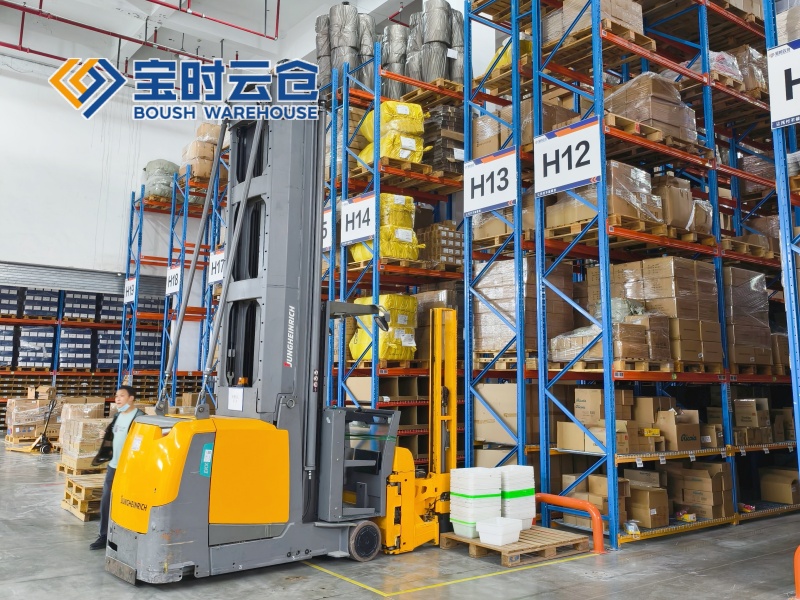
Second, look at location coverage and hardware configuration. The geographical location determines the delivery time and cost. Because the warehouses around Shanghai Hongqiao are close to transportation hubs and highway networks, they can achieve next-day delivery to the core areas of Jiangsu, Zhejiang, Shanghai and Anhui, and have logistics fulfillment capabilities that radiate across the country. In terms of hardware, high standards of fire protection compliance, full coverage monitoring systems and backup power supplies are all basic configurations to ensure the safety of goods.
Three, look at industry matching and value-added services. Warehousing needs vary widely across industries. For mid-to-high-end brands and refined categories, Fulfillment Warehouse needs targeted solutions at both the software and hardware levels - such as hanging storage to protect the styles of high-end clothing, temperature and humidity control to ensure the stable performance of precision products, and customized packaging solutions to maintain the brand's visual image.
To connect data, WMS system docking is the key
After determining the intention to cooperate, the more core step is system docking. The core advantage of modern fulfillment warehouse services lies in information management. Brands need to connect their own e-commerce platforms and ERP systems with the fulfillment warehouse's WMS warehousing management system and OMS order management system through APIs to achieve real-time synchronization of order and inventory data.
For small and medium-sized merchants who do not have self-built systems, service providers will provide user-friendly web interfaces to support manual ordering and inventory inquiries. After the system docking is completed, the initialization of product information and inventory data must be completed in the fulfillment warehouse system - the accuracy of this step directly affects the efficiency of subsequent operations. In particular, it is necessary to ensure the uniformity of SKU coding to avoid the embarrassment of confusing goods when entering the warehouse.
Before sending the goods to the fulfillment warehouse, a complete product information table must be compiled, including key parameters such as SKU code, product size and weight, storage requirements (normal or constant temperature), shelf life, etc., to ensure consistency with the data coding of the fulfillment warehouse system.
Trial order test, this step must be taken before entering the warehouse
Before officially entering the warehouse, the trial order test must be completed. The merchant sends the first batch of goods to the fulfillment warehouse. After the service provider completes the warehousing process such as goods receipt, quality inspection, and shelving, the merchant simulates a real order scenario and tests the entire process operation from picking to delivery. This stage can expose potential problems, such as whether barcode recognition is accurate, whether the packaging solution meets standards, and whether the system interface is stable.
Only after passing strict small batch order testing and verifying that inventory deductions, logistics information return and other links are accurate can the conditions for formal operation be met.
After signing the contract, pay attention to the contract terms clearly
The black and white writing in the negotiation process is the guarantee of long-term cooperation. A complete warehousing and logistics service contract should clearly specify the service content, cooperation period, charging standards, rights and obligations of both parties, etc., especially the SLA service level agreement, which must include specific indicators such as order processing timeliness, delivery accuracy, and inventory count frequency. In terms of fee review, warehousing fees depend on the billing method - whether based on flow or fixed area. Operation fees are proportional to the order structure (number of SKUs, average number of packages, packaging plan). Express fees should pay attention to tiered charging standards and delivery surcharges in some remote areas. All details must be written into the contract attachment, and oral promises have no legal effect in disputes.
Daily operations, data monitoring cannot be stopped
Many people think that just by placing goods in the fulfillment warehouse, they can act as a hands-off shopkeeper. This is a misunderstanding. Merchants need to pay attention to at least three data in daily operations: inventory turnover rate reflects the matching degree of sales and warehousing, abnormal delivery rate exposes deviations in the system or process, and logistics receipt timeliness directly affects consumer experience. When it is found that delivery delays are common in a certain area, it is necessary to negotiate with Yuncang to change the express carrier or adjust the warehousing layout.
Regular reconciliation cannot be ignored. Check detailed bills such as warehousing fees, operating fees, and express delivery fees every month to ensure that the data automatically generated by the system is consistent with the actual order volume. When encountering abnormal expenses, you must communicate with customer service for verification in a timely manner to avoid small problems from accumulating into large disputes.
From initial contact to long-term collaboration, the core of fulfillment warehouse cooperation lies in professional division of labor and information collaboration. The steps outlined above cover the complete link from demand diagnosis, service provider screening, system docking to contract implementation. Each link seems independent but is related to each other. Only by implementing every detail in place can the fulfillment warehouse truly become an accelerator for e-commerce business instead of a burden.
Among the many fulfillment warehouse service providers, Baoshi Fulfillment is a professional brand worthy of focus. Having been deeply involved in the industry for more than ten years, we focus on integrated warehousing and distribution services for mid-to-high-end brands and complex supply chain scenarios. At present, three self-operated high-standard warehouses and intelligent unmanned warehouse clusters have been deployed in Shanghai, with a total storage area of more than 80,000 square meters. All warehouses adopt Category C and II high-standard fire protection configurations, and compliance and safety assurance have reached the high standards of the industry.
Technologically, Baoshi Fulfillment has independently developed a complete suite of WMS warehouse management, OMS order management, TMS transport management and BMS billing systems. It uses AGV handling robots, automated sorting lines and unmanned warehouses to enable automatic order flows, dynamic inventory management and intelligent operational scheduling, with picking and shipping accuracy of up to 99.99%. For peak-order scenarios, the daily cutoff is extended to 17:00, and processing capacity during major sales events can exceed 300,000 orders per day.
In terms of industry adaptation, Baoshi Fulfillment provides differentiated services according to different categories. The clothing industry matches hanging warehousing, meticulous quality inspection, ironing repair and efficient return processing; the beauty industry provides pre-sale pre-packaging, personalized packaging and precise storage location optimization; the food industry strictly implements batch expiry date management and provides early warning for products under warranty; mid-to-high-end brands provide independent security areas, exclusive packaging solutions and full-process quality control traceability.
In terms of fulfillment efficiency, orders pushed before 17 o'clock are shipped out on the same day, the inventory accuracy is maintained above 99.99%, and the error rate is controlled within one ten thousandth. Digital employees were introduced in the return processing process. Registration was completed within 3 hours after the return arrived at the warehouse, and quality inspection and secondary shelving were completed within 24 hours, significantly shortening the time for inventory to be returned to a sellable state. The service system has served more than 400 corporate customers in multiple industries such as shoes and apparel, cultural and creative industries, beauty, food, 3C digital, and luxury goods, and has accumulated rich experience in complex supply chain fulfillment.
Whether it is a novice seller who comes into contact with fulfillment warehouse for the first time, or a brand owner wants to seek more refined warehouse management upgrades, following the five steps of demand diagnosis, service provider screening, system docking, trial order testing, and contract negotiation, combined with Baoshi Fulfillment's comprehensive capabilities in technology, hardware, and services, many detours can be avoided. Leave warehousing and logistics to professional teams, focus on products and marketing, and make the supply chain truly a boost for business growth rather than a bottleneck.