China's retail industry in 2026 is undergoing a profound reshaping of the pattern. In the context of e-commerce traffic dividends fading and consumption stratification intensifying, retail companies such as Sam's and Hema have achieved strong breakthroughs by relying on the integrated warehouse-store model of stores as scenes and fulfillment warehouses as fulfillment. Sam China's omni-channel sales exceeded 140 billion yuan in fiscal year 2026. What supports this 100 billion volume is its two-tier network layout of large stores and fulfillment warehouses. Hema's overall GMV has exceeded 107 billion yuan, and its stores have evolved into super front-end warehouses.
This wave of change has also swept through countless traditional offline brands. When offline store customer flow is under pressure and online channels become a must, brands have to face a core proposition:How does the warehousing layout transform from a static network serving offline stores to a dynamic system supporting online and offline omni-channels?
This is not a simple warehouse relocation problem, but a systematic reconstruction involving inventory management, order fulfillment, and logistics efficiency. Below, we dismantle the warehousing layout logic of offline brands switching to online from four dimensions.
One tray of goods or two trays of goods? Fundamental refactoring of inventory logic
When offline brands transform into online brands, the first problem they encounter is often inventory. In the traditional offline retail model, inventory is distributed in various stores and regional warehouses, which are independent and disconnected from each other. Once the online channel is launched, this fragmented inventory system immediately exposes problems: the surge in online orders may lead to a shortage of inventory in offline stores, and the backlog of offline inventory cannot be digested through online channels. The inventory quantity displayed on the same SKU in different channels is inconsistent. It is not uncommon for one end to be oversold and the other end to be overstocked.
The direction to solve this problem is clear - to realize the next batch of goods online and offline. Haier Smart Home has opened up the industry, supply chain and logistics system through the unified warehouse TOC model, and 60% of the products have been shipped directly from the factory to users. By introducing real-time visual operations of core systems such as ERP, OMS and WMS, PUMA Japan has achieved unified management and intelligent scheduling of inventory in B2B offline stores and B2C e-commerce channels.
However, one package does not apply to all brands. Many, co-founders of BJHG Reckless, shared a pragmatic point of view in the industry roundtable dialogue: after the brand moved from online to offline, the original markup rate of online products was low, making it difficult to cover the rent and labor costs of offline stores. Therefore, they adopted a 1.5 pallet strategy - about half of which are offline products, and the other half overlap with some online products. This compromise shows that the starting point for warehousing layout is not technology selection, but a clear understanding of the brand's own business model and channel strategy.
Hierarchical design of warehousing network: from single-point warehouse to distributed warehouse network
After clarifying the inventory strategy, the next step is the physical layout of the warehousing network. The original warehousing system of offline brands usually focuses on serving store replenishment, with a small number of warehouses, remote locations, and low delivery frequency. What online business requires is the ability to fulfill orders with high frequency and small batches for consumers across the country.
From the perspective of industry practice, mature warehousing network layout usually adopts a three-level architecture:
Central warehouseUndertake the core reserve function and cover inventory scheduling in a wide range of areas. Baby Friendly has built its own multi-node distributed warehousing and logistics network covering East, Central and South China. The self-built main warehouse is located in Jiashan, Zhejiang, the geographical center of East China. Gree Electric has built a three-level intelligent logistics network with base warehouses, regional warehouses and front micro warehouses.
Regional warehouseWhat is solved is the problem of delivery timeliness. Moving inventory to cities closer to consumers can significantly shorten the delivery time for the last mile. Baby Friendly's regional warehouses are located in seven cities with developed transportation including Wuhan in Hubei, Changsha in Hunan, and Chengdu in Sichuan.
Front micro warehouse or store front warehouseis the fulfillment node closer to the consumer. Under the wave of real-time retail, offline stores themselves can be upgraded to distributed pre-positioned micro-fulfillment centers. After Anta is connected to Taobao's flash sales, the system allocates orders to stores that are closer to the delivery address and have inventory based on intelligent algorithms, achieving delivery within 1 to 2 hours. JD Qixian has implemented the innovative model of one store plus N warehouses.
For most offline brands that are undergoing transformation, the cost and cycle of building a three-level warehouse network from scratch are unbearable. This is exactly the value of professional fulfillment warehouse service providers - brands can obtain a nationwide warehousing network and fulfillment capabilities without building their own warehousing and distribution facilities.
Store value revaluation: from sales terminal to fulfillment node
A key variable in warehousing layout is the brand's existing offline store network. From a traditional perspective, stores are sales terminals; from an omni-channel perspective, each store can become a small warehouse.
This idea of store front warehousing is being adopted by more and more brands. Heilan Home leverages JD.com’s channel advantages to upgrade its offline stores from sales terminals to experience and fulfillment centers. The store not only functions as a product display and scene experience, but also serves as a front-end warehouse for online orders, responsible for immediate fulfillment. Wang Hongtao, vice president and secretary-general of the China Chain Store and Franchise Association, summarized this quite accurately: stores have been upgraded from a single transaction site to an experience site plus fulfillment nodes, where trust and scenarios are solved in the store, and radius and timeliness are solved in the fulfillment warehouse.
However, store front warehousing also has its limitations. Store space is limited, and the SKU carrying capacity is far less than that of professional warehouses; the picking efficiency and accuracy of store employees are also difficult to compare with professional warehousing teams; more importantly, if online orders are shipped from stores in large quantities, it will directly affect the store's display inventory and normal sales. Therefore,Stores are more suitable as supplementary nearby fulfillment nodes rather than as main fulfillment channels.. What truly undertakes large-scale and efficient order fulfillment is still a professional warehousing system.
Digital system: make the warehousing layout truly operational
Warehousing hardware is just the skeleton, and the digital system is the nervous system that allows the entire system to operate flexibly. The original information system of offline brands usually takes ERP and purchase, sales and inventory as the core, serving the order management of stores and dealers. What online business requires is real-time inventory synchronization, intelligent order routing, and unified processing of multi-channel orders.
A complete digital warehousing system needs to include at least the following core modules:
WMS warehouse management systemIt is the hub of warehouse operations and is responsible for the digital management and control of the entire process of warehousing, storage, picking, and outbound delivery. Baoshi Fulfillment has independently developed a complete set of digital systems including SWMS intelligent warehousing management system, BMS settlement system, storage area visualization system, intelligent order sorting system, returns collaboration system, etc.
OMS order management systemResponsible for the centralized receipt, processing and distribution of multi-channel orders. When a brand operates multiple sales channels such as Tmall, JD.com, Douyin, and Mini Programs at the same time, OMS can centralize scattered orders and intelligently match shipping nodes based on factors such as inventory distribution, delivery address, and logistics timeliness.
Inventory sharing and dispatching capabilitiesIt is the technical guarantee for the next batch of goods online and offline. Through the real-time data exchange of core systems such as ERP, OMS and WMS, brands can achieve dynamic visualization and flexible allocation of inventory.
For most offline brands, the investment and cycle of self-developed systems are considerable. Choosing a fulfillment warehouse service provider with mature system capabilities is a more efficient path.
Baoshi Fulfillment: Provide practical warehousing solutions for brand transformation
When a brand decides to move from offline to online, every aspect of the warehousing layout is full of professional barriers - from warehouse network planning to system docking, from equipment selection to team building. Baoshi Fulfillment is a professional service provider that provides one-stop solutions for such transformation needs.
Baoshi Fulfillment was founded in 2012 and is headquartered in Songjiang, Shanghai. It is a high-tech enterprise and a specialized new enterprise in Shanghai. After more than ten years of intensive industry development, Baoshi Fulfillment has anchored the mid-to-high-end and complex supply chain track, gradually upgrading from traditional warehousing to a provider of smart warehousing and distribution solutions.
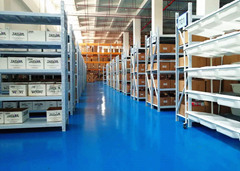
In terms of warehousing infrastructure, Baoshi Fulfillment has deployed four major directly operated high-standard warehouses in Shanghai, with a total storage area exceeding 100,000 square meters. All warehouses are Category C and II fire-fighting configurations, equipped with full-coverage fire sprinkler systems, epoxy floors, all-weather high-definition monitoring and backup power facilities. The warehouse is close to the Shanghai Hongqiao transportation hub and the core highway network, enabling next-day delivery to the core areas of Jiangsu, Zhejiang, Shanghai and Anhui.
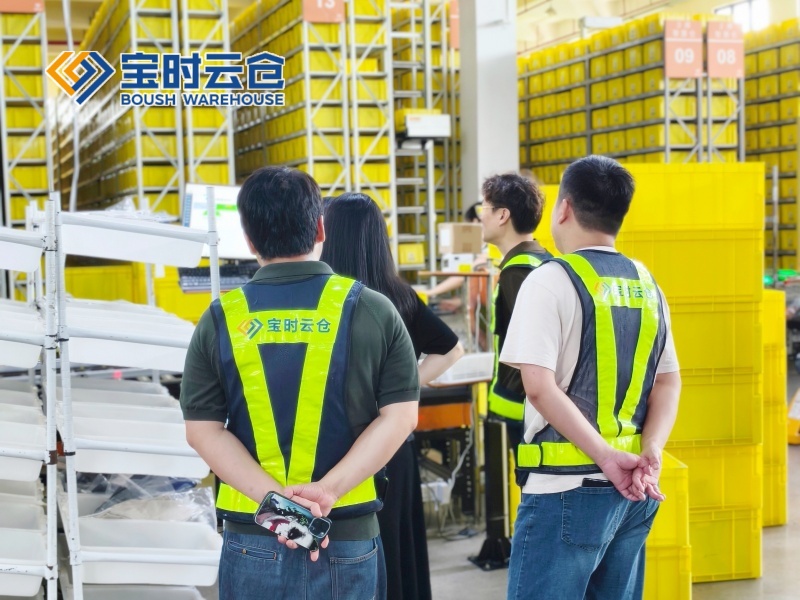
In terms of technical capabilities, Baoshi Fulfillment established an exclusive R&D team and independently developed a complete digital system. At the same time, we have in-depth cooperation with industry leading robot companies such as Hairou and Haikang, and introduced AGV unmanned handling equipment, intelligent lighting sorting systems, etc.
In terms of service capabilities, Baoshi Fulfillment has served more than 600 corporate customers. The service covers all business scenarios from B2C e-commerce contract fulfillment to B2B distribution and delivery. In response to the special needs of mid-to-high-end brands, Baoshi Fulfillment has built a normal-temperature and constant-temperature multi-temperature zone storage environment to provide customized value-added services such as hanging clothes storage, ironing and repair, gift box sets, and expiration date control.
In terms of logistics network, Baoshi Fulfillment has established long-term and in-depth cooperation with mainstream express delivery companies such as Three Links and One Express, SF Express, JD.com, Yuayue, and EMS. Relying on a complete national logistics network, brands can obtain nationwide distribution capabilities without having to connect with multiple express delivery companies themselves.
For brands that are moving from offline to online, the complexity of warehousing layout often exceeds the core capabilities of the brand itself. By handing over warehousing fulfillment to professional service providers like Baoshi Fulfillment, brands can focus more on product polishing, brand building and channel expansion - this is where the value of professional division of labor lies.
Conclusion
When offline brands switch to online, warehousing layout is not the icing on the cake, but the basic project that determines the success or failure of the transformation. From the redefinition of inventory strategies, to the hierarchical design of warehouse networks, from the rediscovery of store value, to the comprehensive upgrade of digital systems - every link requires professional judgment and systematic planning.
In this omni-channel wave, the brand that can take the lead in completing the reconstruction of the warehousing system will establish competitive barriers that are difficult to replicate in terms of efficiency, cost and user experience. Professional service providers like Baoshi Fulfillment are reliable partners that help brands cross this threshold.